
【Japanese New Year Must-Try】Top 10 Traditional New Year Dishes "Osechi Ryori"! How Japanese People Celebrate the New Year!

Contents
Stay Connected in Japan with a 4G eSIM Card (Instant QR Code Delivery)
Comfort and Convenience: Tokyo Limousine Bus from Narita and Haneda Airports
【Traditional New Year Dishes in Japan | 1. Osechi Ryori (御節料理)】
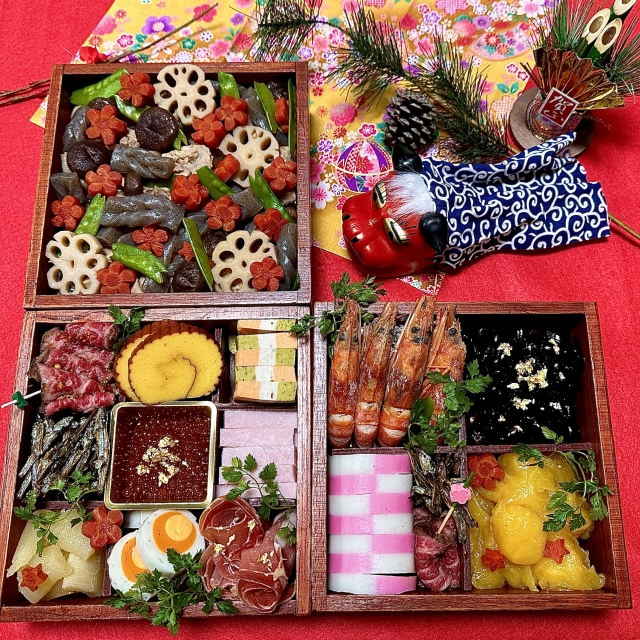
Osechi Ryori is the ultimate traditional feast enjoyed during the Japanese New Year. It's typically served in a beautifully designed multi-tiered box called "Jubako." Each tier is filled with an assortment of dishes, each carrying its own unique meaning and significance. This tradition dates back to the Heian period when it began as a form of court cuisine before gradually becoming a beloved custom among the general public.
【Japanese New Year Must-Eat Dishes | 2. Kuromame (Black Beans)】
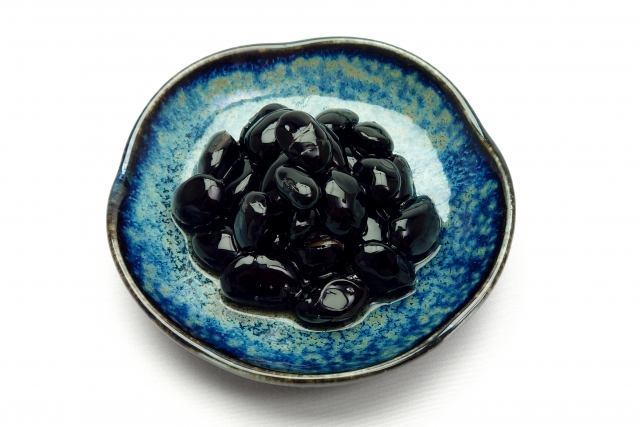
If you're diving into Osechi Ryori, the traditional Japanese New Year feast, you can't miss out on Kuromame, or black beans. These little beans hold a lot of significance! The word "まめ" (mame) means "diligent work" and sounds just like "豆" (mame), which means "bean." This clever play on words symbolizes the wish for a year filled with hard work and good health. To get that perfect shiny look and soft, chewy bite, black beans are cooked slowly and patiently. They're definitely worth the wait!
【Japanese New Year Must-Eat Dish | 3. Kazunoko (Herring Roe)】
Kazunoko, or pickled herring roe, is a traditional Japanese New Year delicacy that shines with a golden hue. This vibrant color symbolizes prosperity and good fortune. The word "子" (ko) in Japanese means "children" or "descendants," so enjoying kazunoko during the New Year is a way of wishing for a bountiful and thriving future for generations to come.
【Must-Try New Year Dish in Japan | 4. Kamaboko (蒲鉾)】
Kamaboko is a classic Japanese fish cake crafted from fish paste and shaped into a semi-circle. Its vibrant red and white colors are a festive symbol in Japanese culture, representing joy and celebration. The semi-circular shape is reminiscent of the rising sun, embodying the promise of a hopeful and prosperous new year.
【Japanese New Year Must-Eat Dish | 5. Datemaki (Sweet Rolled Omelette)】
Datemaki is a delightful sweet rolled omelette crafted from eggs, shrimp paste, and sugar. The golden color of this dish stands for prosperity, and its rolled form is reminiscent of ancient scrolls, symbolizing wisdom and cultural richness. This dish is a tasty way to welcome a year brimming with knowledge and personal growth.
【A Must-Try Japanese New Year Dish | 6. Ozoni】
Ozoni is a quintessential dish to savor on New Year's morning in Japan. This hearty soup combines mochi (rice cakes), vegetables, and chicken, all simmered to perfection. The way ozoni is prepared can vary widely depending on the region. Some areas use a miso-based broth, while others prefer a clear soup. Even the shape of the mochi can differ from one place to another, making each bowl of ozoni a unique experience.
【Japanese New Year Must-Eat Dish | 7. Tataki Gobou (Burdock Root)】
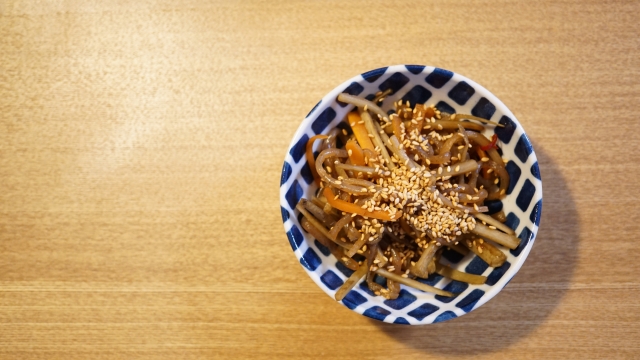
In the world of Osechi Ryori, Japan's traditional New Year feast, burdock root holds a special place. This dish, known as Tataki Gobou, features burdock sliced into thin strips and stir-fried to perfection. It's more than just a tasty treat—it's a symbol of stability and strength. The Japanese believe that starting the year with burdock root helps lay a solid foundation for the months ahead.
【Japanese New Year Must-Eat Dish | 8. Kuri Kinton (Chestnut Sweet Potato Paste)】
If you're celebrating the New Year in Japan, you absolutely have to try Kuri Kinton. This delightful dessert, made from chestnuts and sweet potatoes, boasts a beautiful golden-yellow color that symbolizes prosperity. The texture is wonderfully smooth, and it's sweet without being too rich. It's no wonder this dish is a favorite during traditional New Year festivities!
New Year Must-Eat Dish in Japan | 9. Kombu Maki (Kombu Rolls)
Kombu Maki is a delightful dish where fish paste is wrapped in kombu seaweed. The name "kombu" is reminiscent of the word "yorokobu," which means "to rejoice," making it a festive treat. Additionally, the long shape of the kombu is a symbol of longevity, making it a perfect dish for New Year's celebrations.
New Year's Must-Eat Dishes in Japan | 10. Toshikoshi Soba (Year-End Soba Noodles)
When it comes to New Year's Eve in Japan, indulging in Toshikoshi Soba is a beloved custom. These long, slender noodles are more than just a meal; they represent a wish for a long life. Plus, their delicate texture is thought to help cut ties with the misfortunes of the past year, paving the way for a fresh beginning.
Japan's traditional New Year's cuisine is more than just a feast for the taste buds; it's a window into the country's rich cultural heritage. Each festive dish is steeped in meaning, reflecting the hopes and blessings the Japanese people hold dear as they usher in the New Year. By exploring these unique culinary traditions, you'll gain a deeper appreciation for the cultural significance behind Japan's New Year celebrations. We hope this introduction will give you a delightful glimpse into the heart of Japan's New Year culinary culture!